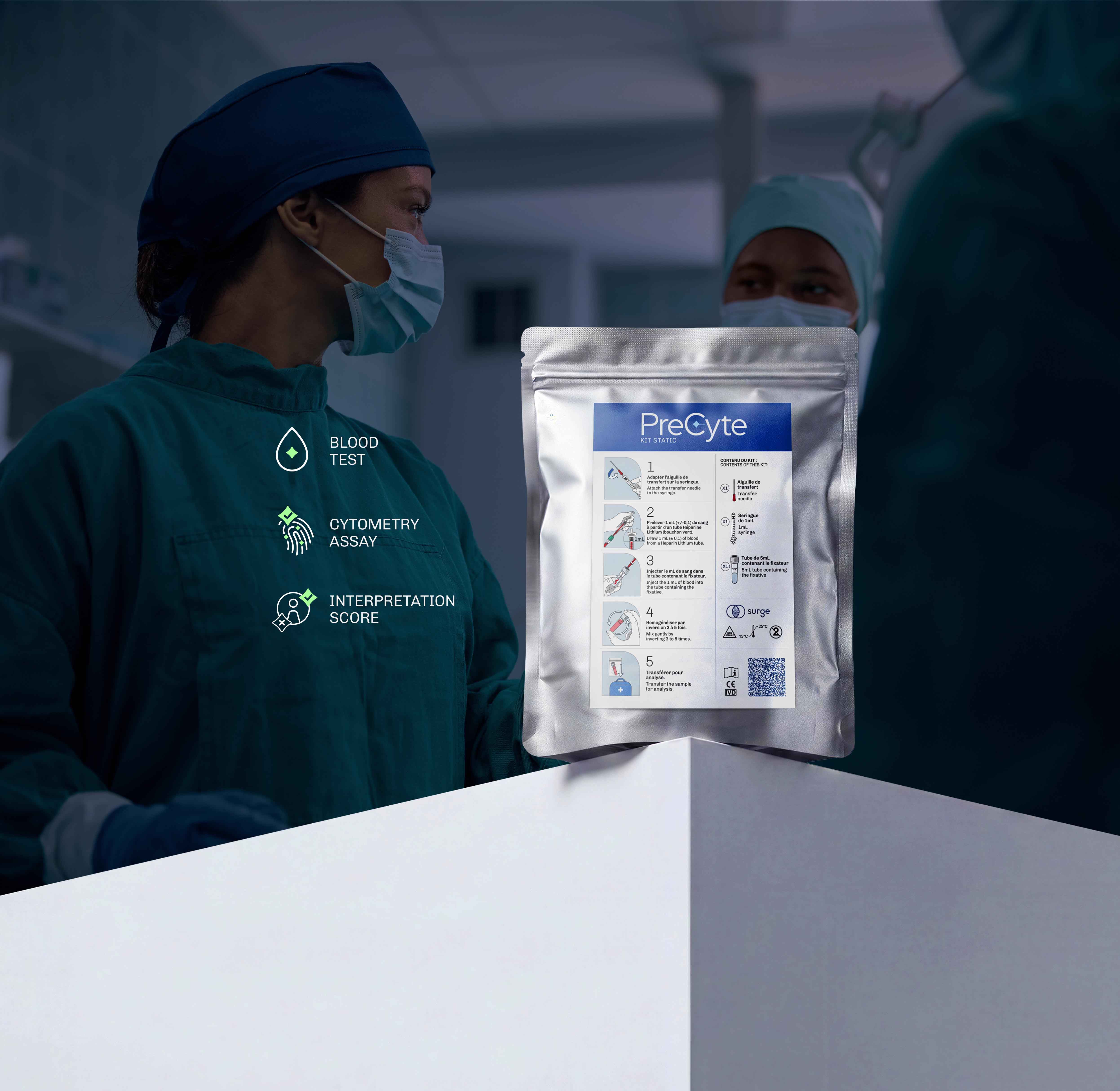
PreCyte aims to be the first blood test to score surgical site infection risk within 24 hours of surgery.
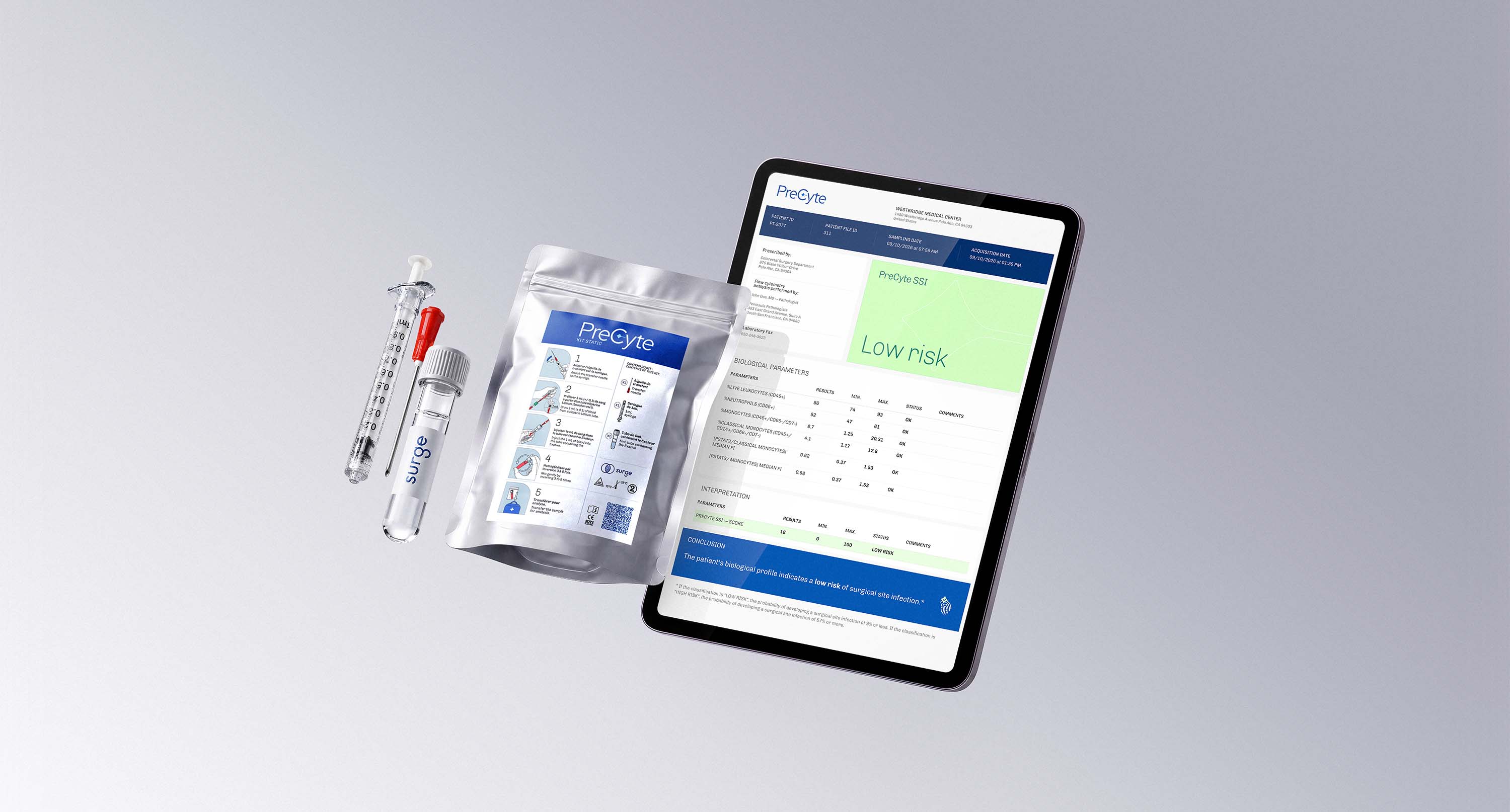

PreCyte transforms how we predict and manage surgical risks.
Preoperative
PreCyte enables prediction of complications with a simple blood test, identifying patients who would benefit from preoperative interventions such as prehab or optimization of the approach, technique, and timing of surgery. The PreCyte test can be repeated after preoperative interventions (prehab or neoadjuvant treatment), allowing the healthcare team to monitor their effectiveness and continually assess surgical readiness throughout the preoperative period.
Postoperative
PreCyte combines clinical data from the surgery with the patient's immune response to the surgical trauma the day after surgery to guide patient monitoring, discharge timing, and anticipation and prevention of complications. By accelerating discharge of patients at low-risk for complications, the risk of hospital-acquired infections is decreased and the economic burden of lengthy hospital stays is eased.


and reduce healthcare costs

63 million elective surgeries are performed annually in the US, with major complication rates reaching 30%. This places a severe burden on patient health and hospital capacity, driving extended stays, avoidable readmissions, and substantial costs.
PreCyte transforms surgical care through individualized risk profiling, empowering surgeons to predict and prevent complications before they occur. Actionable foresight enables surgical risk-adapted lengths of stay and allows care to safely transition toward outpatient settings.
By systematically preventing complications and shortening hospital stays, PreCyte improves patient recovery while capturing billions in potential healthcare savings.
PreCyte is currently under clinical evaluation and is not yet CE marked or FDA cleared.
283 adults undergoing major elective digestive surgery were enrolled and followed for 30 days. Blood was collected on the first postoperative day and analyzed by cytometry using a seven-marker panel.